A few weeks ago, I took a class on hoarding with Randy Frost, co-author of Stuff: Compulsive Hoarding and the Meaning of Things. It was fascinating, especially because one of Randy’s clients, Marnie, joined him.
Marnie hoards, and she has been documenting her journey publicly on Facebook.
She shares photos, stories, and reflections about her journey with stuff. What each item means, why it’s hard to let go, and what it feels like for her to release something.
It’s brave, raw, and deeply moving. Watching someone share their process like that is a reminder of how emotional this work really is.
During the class, Randy said something that stopped me in my tracks:
People are more willing to let go of things when they tell the story of the object.
Not when someone asks them logical questions. Not when they’re pushed or pressured. When they tell its story.
And it hit me…
This is exactly what I’ve witnessed in my own practice for the past 22+ years. Every single day, clients tell me the stories of their stuff. Where it came from. Who gave it to them. What it meant at the time.
And inevitably, somewhere in that story, they find the clarity and courage to let go.
But here’s what usually happens…
Halfway through their story, they pause and apologize. “Oh my gosh, I’m so sorry. I’m wasting your time. You don’t need to hear all this.”
But I do need to hear it. Because the story is the medicine.
Storytelling is how we make meaning. It’s how we soften the shame and start to understand what our things represent—love, loss, identity, creativity, fear, security.
And when we bring those stories into the light, something shifts. The clutter becomes a teacher, not a judge.
So, let’s call this what it is: Show-and-Tell for the Soul. And yes, it really works.
Here are 5 ways storytelling helps you release clutter:
1. It moves you out of defense and into connection.
When you tell a story, you’re not being interrogated or judged; you’re simply sharing. That shift takes you out of the fight-or-flight mode that clutter often triggers, and into a calmer, more creative space where clarity can emerge.
2. It helps you make meaning.
The act of naming what something represents (ie. “This belonged to my grandmother,” “I bought this when I started my business”) turns a vague emotional attachment into something understandable. Meaning brings peace. And peace brings release.
3. It gives you closure.
Telling the story allows you to finish the sentence, both emotionally and energetically. Once you’ve honored what the item stood for, you can let it go with gratitude, rather than guilt.
4. It invites softness.
Storytelling slows you down. It lets compassion sneak in. You start seeing the tender reasons behind your resistance, and that gentleness opens the door for change.
5. It reconnects you to yourself.
Every story you tell about your stuff is really a story about you—your values, your history, your growth. When you see that clearly, you start filling your life with things (and experiences) that reflect who you are now, not who you used to be.
I recently brought this idea into our Chaos to Calm Organizing Community, and we had a “Show-and-Tell” night. People shared the stories behind their antiques, technology, blankets, and shelves of sentimental treasures. It was pure magic!
Ordinary objects became doorways to reflection, laughter, healing, and closure.
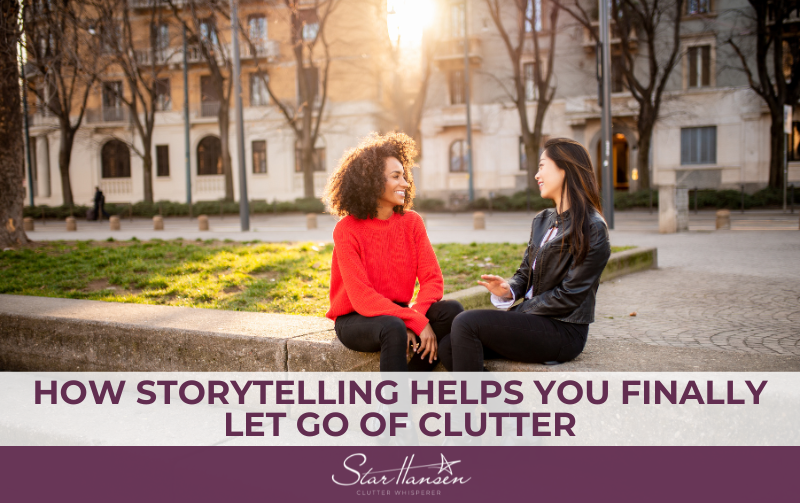
If you want to try it yourself, start small. Pick one item…something that has been sitting in a drawer or on a shelf for too long. Hold it. Tell its story.
Say it out loud to yourself, comment below and tell me about it, or share it with someone safe (someone who won’t rush you or tell you to just “get rid of it”).
There’s real power in being witnessed. There’s magic in the mundane. And there’s healing in your stories.
If this kind of reflection speaks to you, come join us in the Chaos to Calm Organizing Community. We explore the emotional side of clutter, and the stories, the healing, and the freedom that comes from finally understanding your stuff.